
Constitution
-
The Watched Republic: Surveillance and the Shrinking Space for Dissent in India
Abstract This article examines the expanding use of biometric surveillance, particularly facial recognition technology, against protesters in India, and its uneasy fit within the constitutional privacy framework established in Justice K.S. Puttaswamy (Retd.) v. Union of India. Using the Delhi Police’s deployment of facial recognition at the 2026 Cockroach Janta Party protests as a case study, it argues that such deployments fail even the threshold…
-
Planning and Zoning Disputes with Local Authorities in the UK: Insights from Case Law and Emerging Lessons
Abstract Planning and zoning disputes involving local planning authorities in England and Wales continue to generate significant litigation through judicial review, statutory challenges under section 288 of the Town and Country Planning Act 1990, and enforcement proceedings. This article examines key trends emerging from appellate and High Court authority, focusing on three landmark Supreme Court…
-
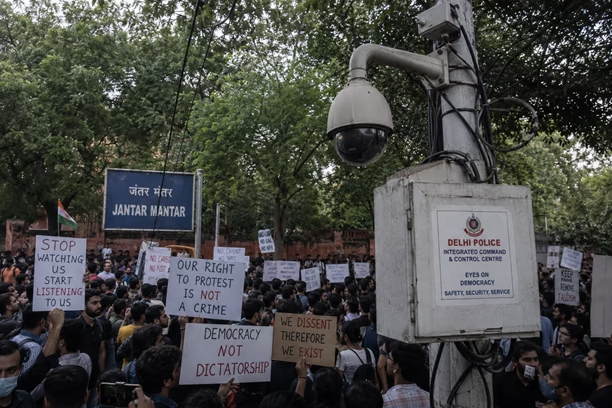
The Right To Protest In The Age Of Artificial Intelligence: Predictive Policing, Facial Recognition, And Democratic Freedoms
Abstract This article critically examines the constitutional implications of the growing deployment of Artificial Intelligence-driven surveillance technologies, particularly facial recognition technology and predictive policing, during public protests in India. Taking the 2026 Jantar Mantar student protests and the ensuing constitutional litigation as its point of departure, the article analyses the intersection of the right to…
-
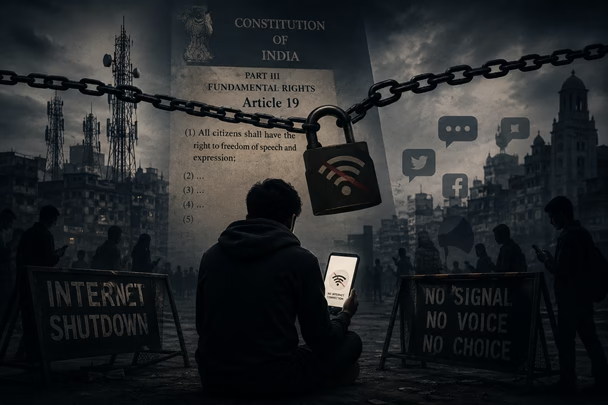
The Invisible Protest: Can Internet Shutdowns Extinguish Article 19 Without Touching The Streets?
Abstract In the summer of 2026, the Internet generation, raised[1] [2] at digital cafes, transformed [3] [4] Jantar Mantar into one of the main spots for the greatest and most impactful mobilizing of the students in India’s recent history. First, it was an expression of disgust toward the supposed exposure of the NEET-UG question paper, followed by other…
-
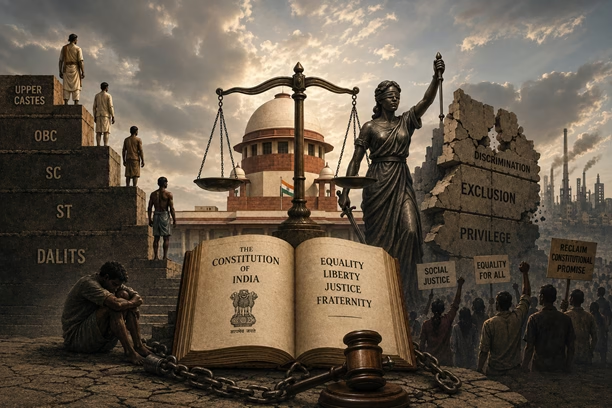
Caste, Courts and Structural Inequality: Reimagining Indian Constitutionalism Through Critical Legal Studies
Abstract This article critically interrogates the structural relationship between caste hierarchy and Indian constitutionalism through the analytical lens of Critical Legal Studies (CLS). While the Constitution of India, forged in the transformative imagination of B.R. Ambedkar, promised a thoroughgoing rupture with hereditary social subordination, the institutional practice of Indian law has frequently reproduced the very…
-
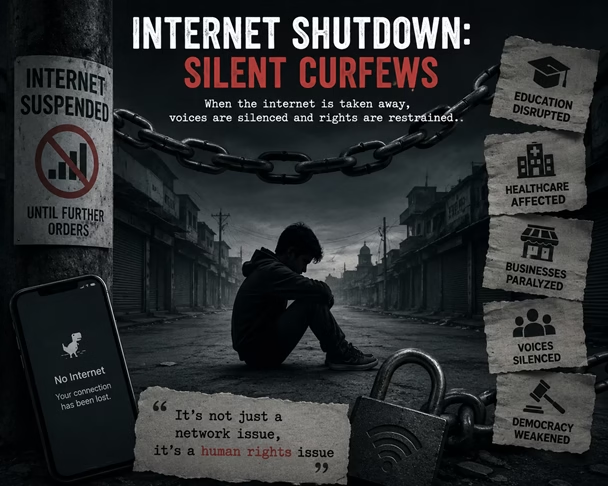
Internet Shutdowns As Silent Curfews: Reimagining Constitutional Limits On Digital Blackouts During Public Protests
Abstract The internet has become an essential part of everyday life and plays an important role in the exercise of constitutional rights. During public protests, however, governments sometimes suspend internet services to maintain public order and national security. This article examines whether such shutdowns are consistent with the constitutional principles of legality, necessity, proportionality and…
-

Right to Menstrual Hygiene – Proclamation is Easier Than Implementation
Abstract From time immemorial, menstruation was a taboo. It was only in the late 1800s that the scientific awareness of women bleeding into their clothes and then using the same clothes for four to eight days came to the minds of people. The beings got ignited with the idea of “hygiene”, “cleanliness”, and “comfort”. The…
-
Beautiful Words, Brutal Walls: The Politics of The PMLA
The supreme law of India, that is, the Constitution, promises every individual the fundamental right to personal liberty under Article 21 and guarantees a fair, neutral trial. Yet, the material reality of our criminal justice machinery tells a fundamentally different story. As of 2026, official data from the Enforcement Directorate demonstrates an alternate reality, with…
-
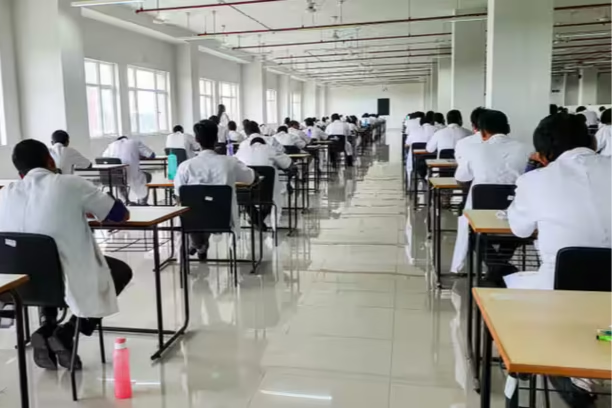
NEET and the Myth of Meritocracy: A Critical Legal Studies Critique of Uniform Educational Standards
Abstract This blog examines NEET critically, focusing on the constitutional and socio-legal issues it raises. It argues that although NEET was set up as a centralised mechanism to promote fairness, merit-based decision-making, and the standardisation of educational performance to establish merit for medical students, it actually serves to reinforce previously established inequalities in both society…
-
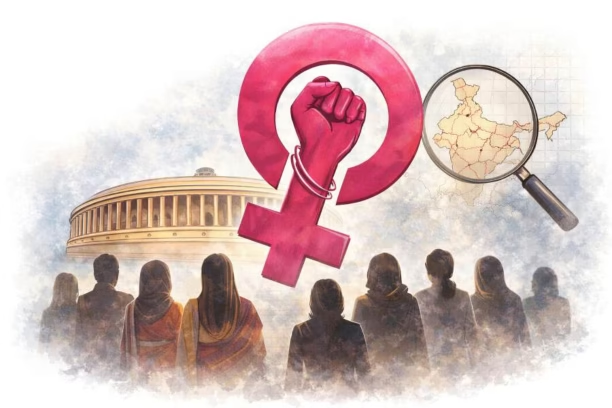
The Cruel Irony Of India’s Women’s Reservation Bill: South Indian Women May Lose More Than They Gain
India Promised Women A Seat At The Table, Then Moved the Table In September 2023, the Indian parliament passed the Nari Shakti Vandan Adhiniyam- the 106th Constitutional Amendment Act welcomed and praised by almost everyone. It was the first time in independent India’s history that 33 percent of seats in the Lok Sabha and State…