
October 2026 Issue
-

The Death of a Right? Section 44(3) and the Hollowing of India’s RTI Framework
The present piece traces the journey of the Right to Information Act in India, which was born out of prolonged protests demanding transparency. It also examines how the Act has been gradually undermined by institutions within the country’s government, including the judiciary, culminating in what may be the final nail in its coffin: the Digital…
-
Corporate Groups: Unified Economic Reality Or Distinct Legal Fiction
Abstract This article examines the doctrinal tension surrounding corporate groups under Indian law, where the classical principle of separate legal personality, established by Salomon v Salomon & Co Ltd, sits uneasily alongside the economic reality that group entities often function as a single enterprise. While company law recognises holding and subsidiary relationships and even mandates…
-
Face Recognition and Biometric Surveillance: Revisiting Puttaswamy Through Semantic-Originalist Lens
A Live Controversy, Not a Recap: Why Puttaswamy Is Being Tested Again Recently, India witnessed a strong student-led protest against the paper leaks in the prestigious National Eligibility-cum-Entrance Test (NEET), which is a national level entrance test for admission into medical colleges. The protest spanned across many cities and police personnels were deployed for maintenance…
-
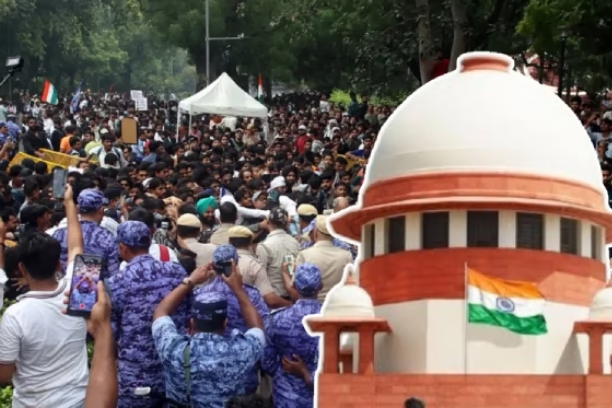
The State’s Duty to Facilitate, Not Merely Regulate: Rethinking the Constitutional Governance of Public Protests
Abstract The freedom to protest is a crucial dimension of constitutional democracy whereby individuals can express their disapproval of governmental actions, criticize the same and seek accountability. Even though Article 19(1)(a) and 19(1)(b) of the Constitution of India safeguard the freedom of expression and assembly, the regulation of protests is generally oriented more towards considerations…