
PMLA
-
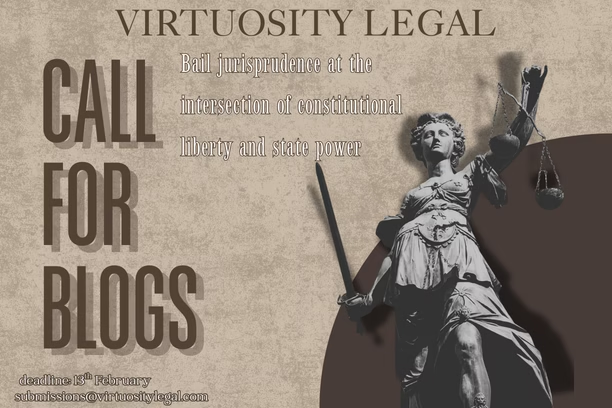
Bail as Exception: The Parallel Legal Order Created by Special Criminal Law
The bail jurisprudence in India is based on the premise that bail is the rule, jail is the exception as observed in the case of Gudikanti Narasimhulu v. Public Prosecutor[i]. This principle originates from Article 21 which stipulates that any restraint on liberty of the individual must be balanced on just, fair and reasonable procedure…
-
Discretion Without Doctrine: How Bail Jurisprudence Normalised Constitutional Uncertainty in India
Abstract Bail jurisprudence in India operates at the fault-line between the State’s coercive authority and the individual’s constitutional entitlement to personal liberty. While the Supreme Court has consistently recognised bail as a constitutional safeguard rather than a mere procedural concession, contemporary practice reveals a system marked by doctrinal fragmentation and institutional unpredictability. This article argues…
-
Settled Position or Persisting Confusion: Examining the Evolving Jurisprudence on PMLA Offence vis-à-vis Predicate Offence
One of the current debates relating to the Prevention of Money Laundering Act, 2002 (“PMLA”) concerns the relationship between the predicate offence and the offence of money laundering under PMLA. While the Supreme Court in 2022 declared that money laundering can only exist when the predicate offence does, the implications of quashing, dismissal, or acquittal…