
International law
-
From Kosovo to Palestine: The Geopolitics of Selective Recognition
Recognition is one of the most decisive yet contentious acts in international law. It determines who participates in the international system as a legitimate sovereign state. In theory, the criteria for statehood are well-defined under the Montevideo Convention of 1933, which lists a permanent population, defined territory, effective government, and capacity to enter relations with…
-
The Paradox of Modern Statehood: Why Law says Yes but Politics says No.
International law is often described as one of the most paradoxical concepts of law, where one state agrees while another state contradicts. Nations rarely reach a common consensus on fundamentals related to international law. Whether it constitutes as true law or when a political entity should be recognised as state. This disagreement is mostly derived…
-
The Unequal Architecture of Recognition: A Critical Study of the Politics of Recognition in Sudan and Palestine amid Genocide
The notion of formal recognition within the international system is viewed as a formal acknowledgement for an entity to qualify as a state. Sudan and Palestine demonstrate contrasting dimensions of the recognition politics. Sudan is fully recognised as a sovereign state, and the state recognition remains largely unaffected despite extensive documentation of atrocities in the…
-
Subjects of Law or Outlaws? The Legal Personality of Non-State Armed Groups
States are considered the primary legal entities and subjects of international law with the power and capacity to make treaties, however they can still make agreements with non-state entities, such as NSAGs, international organizations, individuals and people who acquire legal personalities and struggle for equal rights. The legal status of non-state armed groups (NSAGs) in…
-

A Case for Recognizing Gendered Caste Discrimination under the ICERD and the Indian Law
A week before the whole world was about to celebrate the International Women’s Day, ironically with many people and national leaders in India even posting about it on social media, a court in Uttar Pradesh, released the three men accused of the brutal gang rape and murder of a 19-year-old Dalit girl in Hathras in…
-

The United Nations Internal Justice System and its challenges | Judge Teresa Bravo writes
Teresa Bravo is an Appeal’s Court Judge, Former Judge of the UNDT and the Judge of Asian Development Bank Administrative Tribunal. International organizations enjoy jurisdictional immunity from member states, an essential instrument of their institutional autonomy, addressed at avoiding political interference in the execution of their mandates. These organizations have created internal justice systems which…
-

Closing the Accountability Gap: Corporate Ecocide and the Imperative for International Legal Reform
Ecocide, which refers to the widespread and severe destruction of the natural environment, has been condemned by the legal affairs committee, followed by the direction of travel by four previous consultative committees in the European Parliament. This is in line with the Independent Experts Panel’s (IEP) report which is run by the charitable group of…
-

Nature’s Silent Suffering Amidst War’s Devastation
“The birds sing because they know you’re safe.” Alina’s mother whispered these gentle words every night as she tucked her six-year-old daughter into bed, when she fell asleep every night to the sound of birdsong outside her bedroom window in Bucha, Ukraine. But one cold morning in February 2022, the birds were silent. Missiles screamed…
-
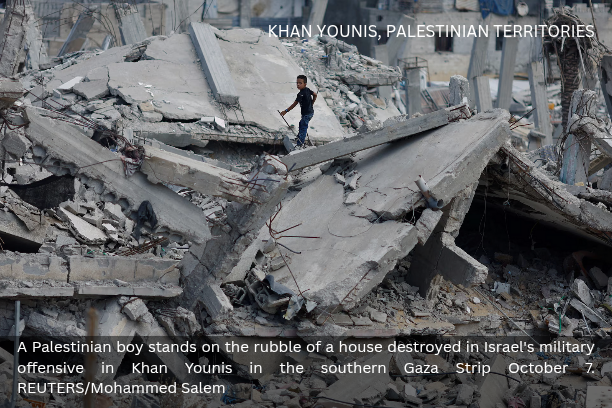
Gaza and the Global Crisis of International Law: A Legal Reckoning in an Age of Strategic Hypocrisy | Faisal Kutty writes for Virtuosity Legal
The carnage in Gaza has not only shattered lives and landscapes but also exposed a seismic crisis in the global legal order. Far from being a remote regional conflict, Israel’s war on Gaza has become a crucible for testing the very foundations of international law, humanitarian norms, and Western political credibility. The legal implications are…